Columbus keeps growing, and so do the cities around it. If you’re shopping for a home in Central Ohio, the suburbs of Columbus, Ohio give you plenty of choice, from historic village centers to brand-new subdivisions with easy access to the city.
This guide walks through the best suburbs in the Columbus area for homebuyers in 2026. We describe each one by what you can see on the ground, like the housing and the parks, plus how it connects to the rest of the region. There’s no single perfect place to live. Treat this as a starting point, not a ranking.
What Are the Best Suburbs of Columbus, Ohio?
The Columbus suburbs buyers ask us about most are Grandview Heights, Upper Arlington, Dublin, Worthington, Westerville and Powell. New Albany, Bexley, Hilliard, Gahanna and Delaware round out the list.
Each one is its own city with its own services, and several sit only a few miles from downtown Columbus. Here’s a quick comparison, with 2020 population figures from the Census Bureau.
| Suburb | County | 2020 Population | Known For |
|---|---|---|---|
| Grandview Heights | Franklin | 8,085 | Grandview Avenue, Grandview Yard |
| Upper Arlington | Franklin | 36,800 | Planned 1910s layout, 21 city parks |
| Dublin | Franklin, Delaware, Union | 49,328 | Historic Dublin, Bridge Park |
| Worthington | Franklin | 14,786 | Village green, Saturday farmers market |
| Westerville | Franklin, Delaware | 39,190 | Uptown District, Otterbein University |
| Powell | Delaware | 14,163 | Historic downtown, newer subdivisions |
| New Albany | Franklin, Licking | 10,825 | Georgian-inspired architecture, Rose Run Park |
| Bexley | Franklin | 13,928 | Capital University, Main Street |
| Hilliard | Franklin | 37,114 | Old Hilliard, Heritage Trail |
| Gahanna | Franklin | 35,726 | Creekside District, Big Walnut Creek |
| Delaware | Delaware | 41,302 | Ohio Wesleyan University, historic downtown |
1. Grandview Heights

Grandview Heights covers just 1.32 square miles. It’s located conveniently close to the Ohio State University campus, with the city of Columbus wrapped around it. Most of the housing dates to the early 20th century, and a 2025 survey of the First and Grandview area found homes and shops built mostly between 1916 and 1928, including bungalows and Craftsman-style buildings.
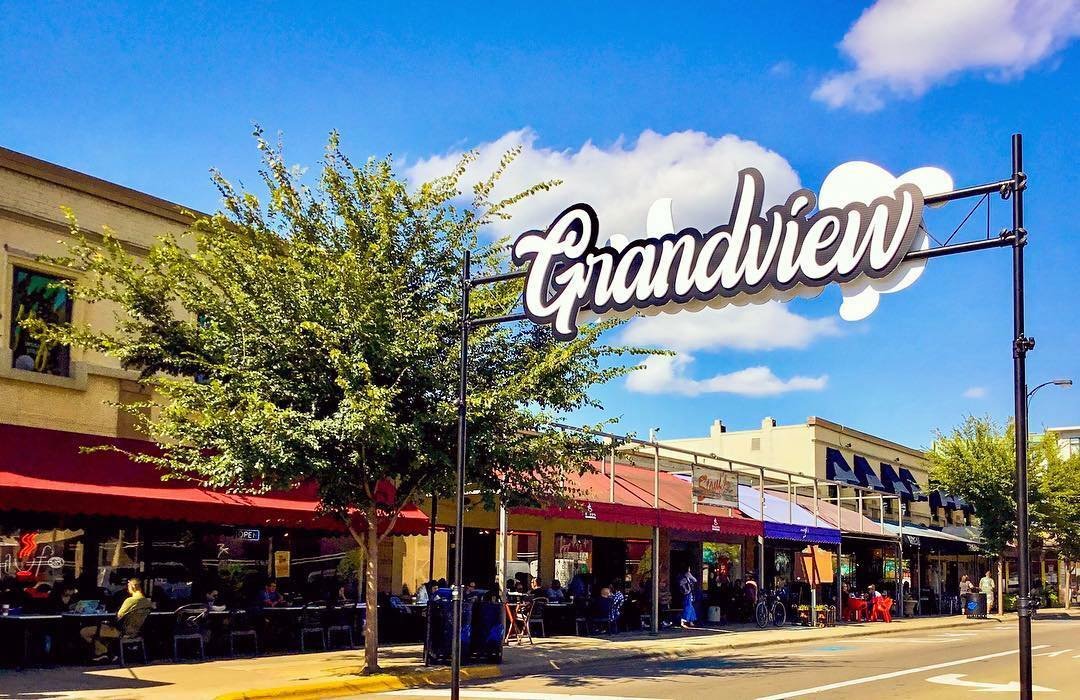
Grandview Avenue is the main strip for shops and restaurants, and its 1927 Bank Block building is on the National Register of Historic Places. On the east side, Grandview Yard mixes newer housing with offices, shops, restaurants and hotels on a former warehouse site.
Browse Grandview Heights homes for sale to see what’s listed now.
2. Upper Arlington

Upper Arlington began in 1913, when brothers King and Ben Thompson bought 840 acres northwest of the city and planned streets that follow the contours of the land. It became a village in 1918 and a city in 1941, with the Scioto River along its western edge.
A large share of the city is the Upper Arlington Historic District, listed on the National Register in 1985. It covers 536 acres of mostly single-family homes in 20th-century revival styles, Georgian Revival among them.
Scioto Country Club, founded in 1916, hosted the 1926 U.S. Open.
The city maintains 21 parks, from Northam Park to Jack Nicklaus Park. Shopping is spread across the Kingsdale, Lane Avenue and Mallway business districts plus Tremont Center. Civic organizations matter here too, and the Upper Arlington Civic Association runs the Fourth of July parade along Northwest Boulevard every year.
See current Upper Arlington homes for sale.
3. Dublin

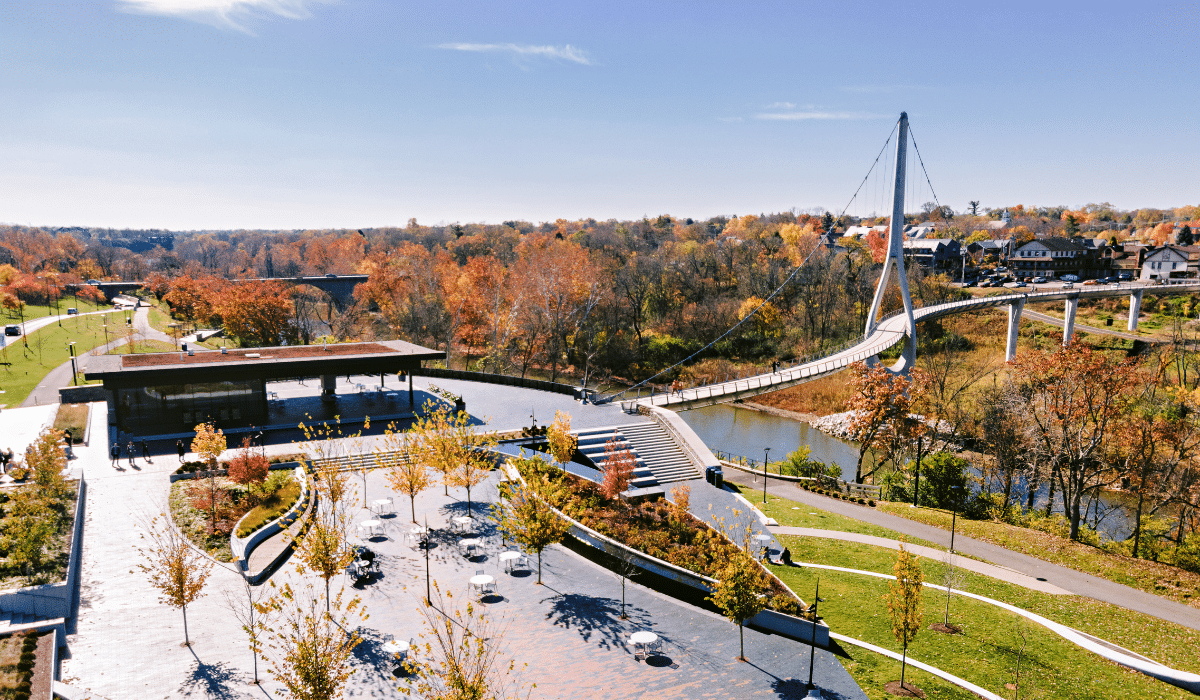
Dublin is the largest suburb on this list, with 49,328 residents in the 2020 count. It reaches beyond Franklin County into Delaware and Union counties. John Sells laid out the original village in 1810. Historic Dublin still has its dry-laid stone fences, and across the Scioto River sits Bridge Park, a newer mixed-use district.
The Dublin Link pedestrian bridge connects the two sides. It opened in 2020, and the city calls it the longest single-tower S-shaped suspension bridge in the world. Dublin also has more than 60 parks and over 160 miles of shared-use paths. Its calendar is full of community events, led by the Dublin Irish Festival in late July or early August, which bills itself as one of the largest Irish festivals in the world. Every June, Muirfield Village Golf Club hosts the Memorial Tournament, founded by Jack Nicklaus.
Take a look at Dublin homes for sale.
4. Worthington

Worthington was founded in 1803 by settlers from Connecticut led by James Kilbourn. They laid it out like a New England town, with lots arranged around a village green in the middle of town that’s still there today.
Old Worthington along High Street is a historic district on the National Register, with more than 450 properties.
The city has 31 National Register listings in all, many of them Federal style. The Orange Johnson House, started in 1811, is one of the oldest.
The Worthington Farmers Market runs Saturday mornings on High Street from May through October, then moves indoors for winter. In 2024, USA Today named it the best farmers market in America.
5. Westerville

Westerville sits northeast of downtown and spans Franklin and Delaware counties. Its Uptown District along State Street is on the National Register, with 57 contributing buildings. The oldest, a stagecoach stop and inn, dates to 1852. Otterbein University, founded in 1847, anchors the uptown area.
Westerville also has an unusual past. The Anti-Saloon League moved its headquarters here in 1909, earning the town the nickname Dry Capital of the World. Nearby Temperance Row has 20 Craftsman homes built between 1910 and 1935. For time outside, Westerville has many parks, 26 in all, along with 51 miles of paved trails. Inniswood Metro Gardens covers 123 acres, and Hoover Reservoir sits just east of the city limits.
Browse Westerville homes for sale.
6. Powell

Powell is in Delaware County, just north of Columbus. It stayed a small village for most of its history, then grew fast, from 2,154 residents in 1990 to 14,163 in 2020 according to the Census Bureau.
That growth means much of the housing is newer. Residential development took off in the early 1980s, and most subdivisions went up from then on around a small historic downtown at Olentangy and Liberty streets. Powell has a quieter suburban feel with easy access to recreational facilities and big attractions, since the Columbus Zoo and Aquarium and Zoombezi Bay sit just outside the city in Liberty Township. Each summer the Powell Festival brings live music and fireworks to Village Green Park.
View current Powell homes for sale.
7. New Albany
New Albany is a planned community that took shape from the late 1980s, and a master plan first adopted in 1998 still guides how it grows. The look is consistent, with Georgian and Federal-inspired architecture and white horse fences along the main roads.
The city’s design guidelines draw on traditional American styles, Colonial Revival included.
The Village Center is built around Rose Run Park and the McCoy Center for the Arts. The city grew about 40% between 2010 and 2020, and its planned neighborhoods share community events like the Healthy New Albany Walking Classic, a walk that has run for more than 20 years.
Intel’s Ohio One semiconductor campus is under construction in the Licking County portion of New Albany, with operations targeted for 2030 to 2031.
8. Bexley
Bexley is an enclave east of downtown Columbus that grew outward from Alum Creek. Most of its estate-era building happened between the late 1890s and the 1920s. Several of its National Register listings are Tudor Revival homes from that period. That historic architecture is a big part of its character.
Bexley also has a strong educational presence as home to Capital University’s main campus, and the Ohio Governor’s Residence is here too. On East Main Street, the Drexel Theatre opened on Christmas Day 1937.
Browse Bexley homes for sale.
9. Hilliard

Hilliard started in 1853 as Hilliard’s Station, a stop on the railroad northwest of Columbus. Old Hilliard still centers on that history, and Hilliard’s Station Park marks the site of the original station and town square.
The city grew about 30% between 2010 and 2020. You’ll find older and newer neighborhoods side by side, including new construction. The Heritage Trail runs about six miles from Old Hilliard toward Plain City, and the Franklin County Fair is held at the fairgrounds in Hilliard each July.
10. Gahanna
Gahanna sits about eight miles northeast of downtown by the city’s count. Its proximity to John Glenn Columbus International Airport makes travel easy, and the city was founded in 1849 along Big Walnut Creek.
Green space is a big part of life here. The Creekside District, the walkable center of town, has Creekside Park right on the water. In 1972 the Ohio legislature named Gahanna the Herb Capital of Ohio. The Ohio Herb Center on Mill Street keeps that tradition going.
11. Delaware
Delaware is the county seat of Delaware County and the farthest north on this list. It’s the birthplace of President Rutherford B. Hayes and home to Ohio Wesleyan University, chartered in 1842.
Downtown Delaware’s Sandusky Street corridor is a National Register historic district, and the American Planning Association named downtown a Great Place in America in 2019. Every September, the Little Brown Jug harness race runs at the Delaware County Fair. Delaware State Park sits just north of town along US 23.
Browse Delaware homes for sale.
How to Choose Among the Best Columbus Suburbs
Start with your commute. Major highways shape daily life here, with I-270 looping around Columbus and I-71 and US 23 carrying traffic north and south. A suburb that looks close on a map can feel far at rush hour. Drive the route at the time you’d actually be on the road.
Next, decide how you feel about home age. Grandview Heights, Bexley, Worthington and Upper Arlington lean older, while Powell, Hilliard, New Albany and the newer Delaware County communities have far more homes built since the 1980s.
Look at living costs beyond the price tag too, since property taxes vary by county and school district and Franklin County is updating property values this year. Our guide to the cost of living in Columbus breaks down what to budget.
If great schools are high on your list, look up each district’s Ohio School Report Card.

Prefer City Living? German Village and Downtown Columbus
Not everyone wants a suburb. If you’d rather live inside the city, neighborhoods like German Village, the Short North, Italian Village and Victorian Village keep you close to downtown Columbus, with art galleries and restaurants along High Street, and German Village is its own historic district on the National Register.
Our guide to the best neighborhoods in Columbus covers those areas in detail.
FAQ About Columbus Suburbs
Which suburbs are closest to downtown Columbus?
Grandview Heights and Bexley are two of the closest. Both are small cities set within Columbus, so you get your own city services while staying a short drive from downtown.
Which Columbus suburbs have the most new construction?
Delaware County, home to Powell and the city of Delaware, grew faster than any other Ohio county from 2010 to 2020. Hilliard and New Albany also added a lot of residents, and nearby Union County grew quickly too.
Which suburbs have historic districts?
Worthington, Upper Arlington, Westerville’s Uptown and downtown Delaware all have districts listed on the National Register of Historic Places. Historic Dublin has many National Register buildings as well.
What community events do Columbus suburbs host?
The big ones include the Dublin Irish Festival, the Memorial Tournament, the Little Brown Jug in Delaware and the Powell Festival. Upper Arlington’s Fourth of July parade is another summer tradition.
Find Your Suburb with the Clarizio Home Team
Every suburb on this list has its own feel, and the right one comes down to your commute and the kind of house you want. The Clarizio Home Team works with buyers across Columbus and Central Ohio every day, and most of our team grew up here.
Reach out through our contact page and we’ll help you narrow down which suburbs fit, then show you what’s on the market.